
Thank you for your interest
Thank you for your interest
And congratulations for taking the first step towards unlocking the biggest growth opportunity of our time!
And congratulations for taking the first step towards unlocking the biggest growth opportunity of our time!
While your report is on its way...
While your report is on its way...
While your report is on its way...
Dive into more insights, research, and resources we've put together to help close the gap, for everyone.
Dive into more insights, research, and resources we've put together to help close the gap, for everyone.
Dive into more insights, research, and resources we've put together to help close the gap, for everyone.
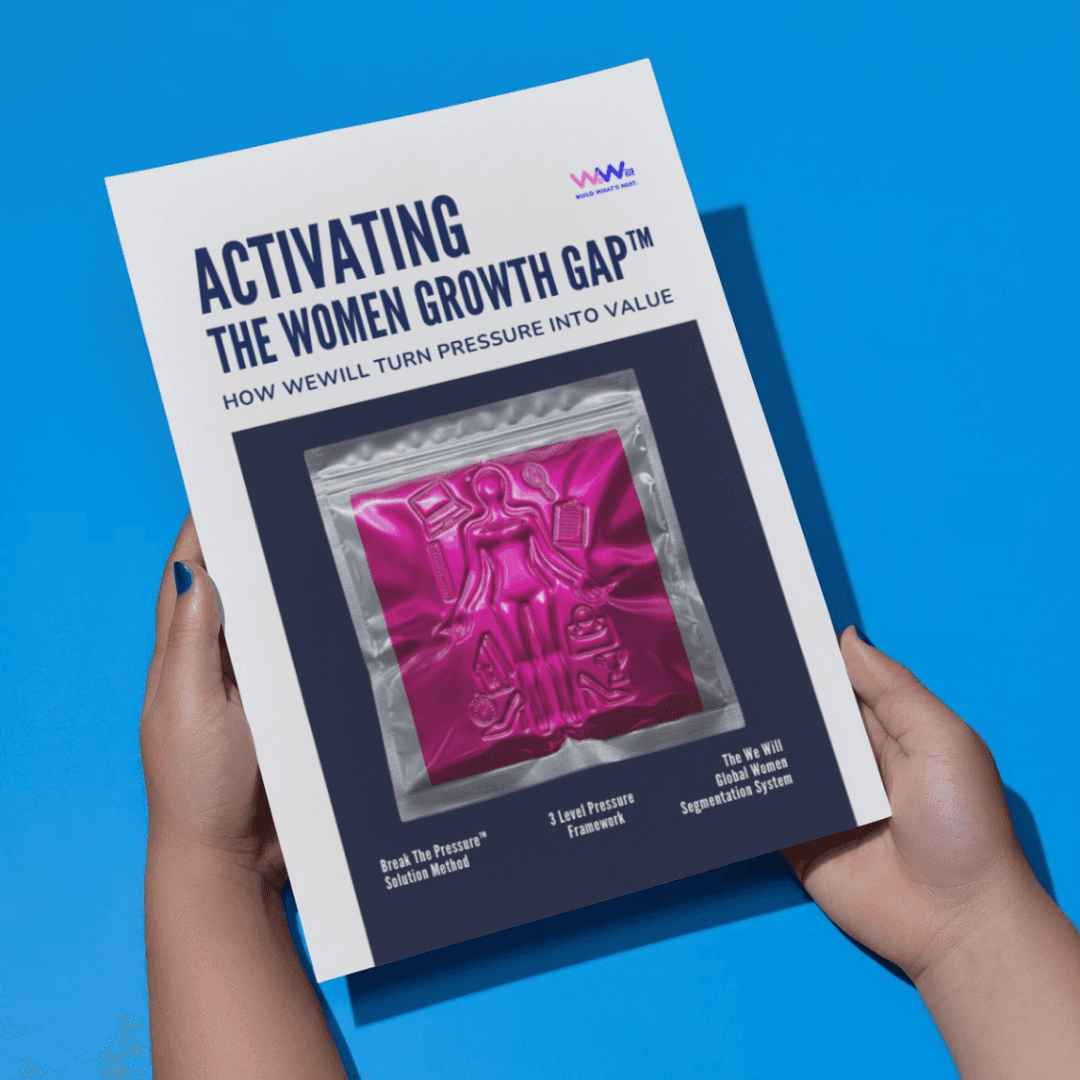
Activating the Women Growth Gap™
This report moves from opportunity to action - providing the strategic frameworks and tools to start translating insight into solution development.
This report moves from opportunity to action - providing the strategic frameworks and tools to start translating insight into solution development.
What’s inside?
An in-depth analysis of today’s cultural context around gender equality: how we got here, where are the tensions and how business in impacted
Key regional differences showing why a one-size-fits-all approach fails
A structured and detailed approach to activating the Women Growth Gap through WeWill tools:
The WeWill Global Women Segmentation System - with segment snapshots
The 3-Level Pressure Framework - mapping the real pressures shaping women’s lives as consumers, customers, and employees
The Break The Pressure™ Solution Method - with steps, templates, and deliverables.
Foundation:
Grounded in research, data, and global expert input (psychologists, coaches, therapists).
What’s inside?
An in-depth analysis of today’s cultural context around gender equality: how we got here, where are the tensions and how business in impacted
Key regional differences showing why a one-size-fits-all approach fails
A structured and detailed approach to activating the Women Growth Gap through WeWill tools:
The WeWill Global Women Segmentation System - with segment snapshots
The 3-Level Pressure Framework - mapping the real pressures shaping women’s lives as consumers, customers, and employees
The Break The Pressure™ Solution Method - with steps, templates, and deliverables.
Foundation:
Grounded in research, data, and global expert input (psychologists, coaches, therapists).
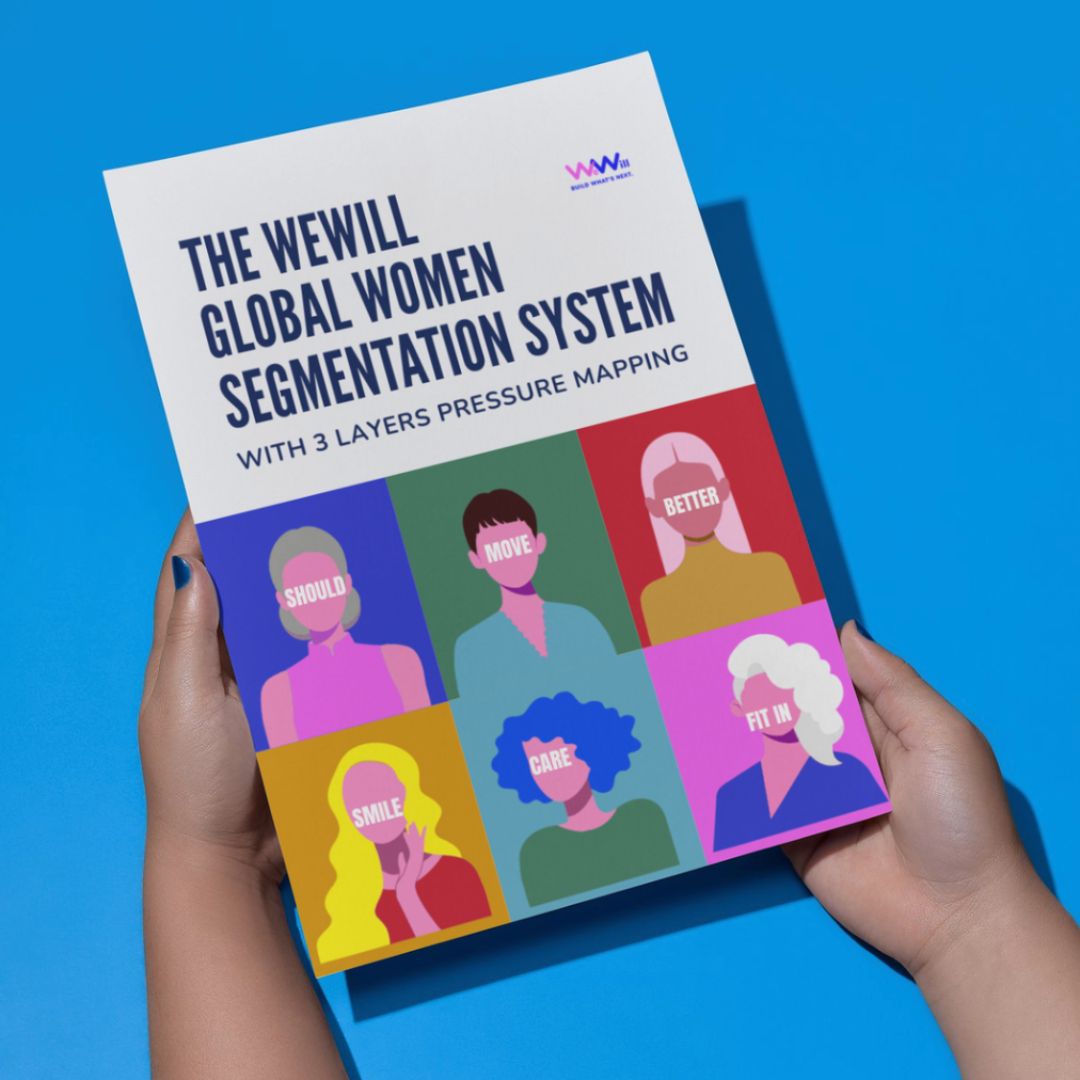
Global Women segmentation system
A deep, actionable segmentation that doesn’t label or reduce women - it uncovers their full reality and complexity and translates that into business growth directions.
A deep, actionable segmentation that doesn’t label or reduce women - it uncovers their full reality and complexity and translates that into business growth directions.
What’s inside?
Acomplete, multi-dimensional definition of all 6 global women segments:
Psychographic Profiles:
Core identity, drivers, markers, lifestyle, and life dimensions
Pressure Landscape:
Pressure logic, 3-level pressure mapping (inner, peer, societal), pressure paradox, and intensity
Commercial & Strategic Profiles:
Emotional and functional needs, decision criteria, key channels, and strategic implications
From Pressure to Business Impact:
How each segment’s pressure profile shapes relationships with:
Work
Products & Services
Communication
Experience and the cost of ignoring these pressures
Opportunity Mapping:
Key breaking points and future solution directions
Executive Snapshots:
Ready-to-use summaries for presentations, workshops, and decision-making .
Research foundation:
A proprietary WeWill multiaxial model combining: Qualitative expert interviews with psychologists, therapists, and coaches from around the globe, Ethnomethodological observation, Socio-cultural and behavioral research, Integration of established value systems (Schwartz, Rokeach), External validation by psychologists and sociologists.
What’s inside?
Acomplete, multi-dimensional definition of all 6 global women segments:
Psychographic Profiles:
Core identity, drivers, markers, lifestyle, and life dimensions
Pressure Landscape:
Pressure logic, 3-level pressure mapping (inner, peer, societal), pressure paradox, and intensity
Commercial & Strategic Profiles:
Emotional and functional needs, decision criteria, key channels, and strategic implications
From Pressure to Business Impact:
How each segment’s pressure profile shapes relationships with:
Work
Products & Services
Communication
Experience and the cost of ignoring these pressures
Opportunity Mapping:
Key breaking points and future solution directions
Executive Snapshots:
Ready-to-use summaries for presentations, workshops, and decision-making .
Research foundation:
A proprietary WeWill multiaxial model combining: Qualitative expert interviews with psychologists, therapists, and coaches from around the globe, Ethnomethodological observation, Socio-cultural and behavioral research, Integration of established value systems (Schwartz, Rokeach), External validation by psychologists and sociologists.